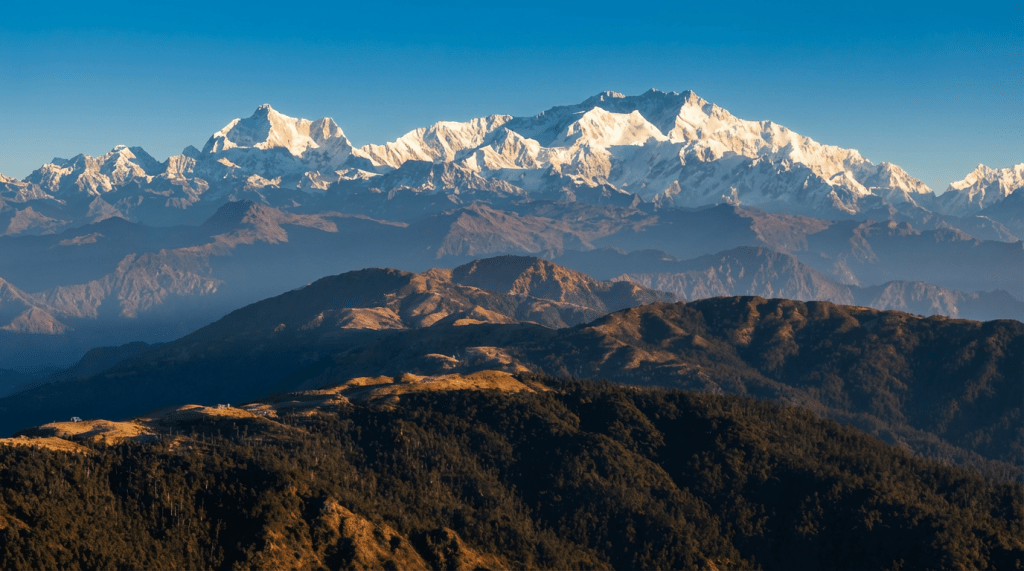
I have been trying to find out the answer of the question, “What is India”. The first response has been “it is very difficult to say”. In a very simplistic way, it is that rhombus-shaped country bound by Himalayas and impossible-to-penetrate forest on one side; let’s say the side on positive X-Y coordinates. Then if we move counter-clockwise, we see some more mountains (Karakoram), desert (Thar) and dry lands (Kach) on the 2nd side, Arabian Sea on the 3rd, Indian Ocean between 3rd and 4th, and the Bay of Bengal on the 4th side. As far back as the history goes, this patch of land has been defined as a unique country, called India. But it is not just a patch of land with geographical diversity. If it was just a patch of land, it would not have inspired so many billions of people, spanning a time period of about five thousand years, to risk their lives to cross all these geographical barriers to reach here. More interestingly, once these immigrants came, they just settled down here. Some of the most vagabond and restless group of people stopped venturing completely once they arrived here. India is not the greenest country of the world, nor is it a country richest with minerals or any other natural resources; unless, of course, we consider ‘human’ as a natural resource. The sheer number of this natural resource, in India, is overwhelming, but there is a good reason that ‘human’ is not considered as a simple natural resource. It is the ‘human spirit’ that makes it quite whimsical with currently understood laws of nature.
It is the human spirit that makes this rhombus so unique. Synthesis, accumulation, nurturing, application, necessary adjustments, additions and modifications, further synthesis and this whole cycle going again and again with ‘human spirit’ makes this rhombus unique. This process started at the dawn of human civilization, it is continuing and will continue till the perfection is reached, if ever.
One can think it as a grand scientific project, not with human genome, not with space, but with ‘human mind’ and its power, which is infinite. Everything that this land and its people have done is to pursue this project. Be it forming a religion with diversity more than all the religions of the world taken together, be it developing a strange form of exercise named Yoga, be it writing books after books to provide stepwise guidance to concentrate mind, be it writing books to guide how to have physical enjoyment, be it earning money and saving it, be it safeguarding the tradition ferociously and also embracing the latest fad, in a nutshell, be it something good or be it something bad, the effort is towards taking the human spirit to the state of perfection.
But human spirit cannot be quantified, cannot be compared; can ONLY be felt. So if one wants to understand India it has to be by the feeling, which is done through a balance between the heart and the brain. Brain helps us to gain and process information in a rational way. Heart helps us to leap over that barrier that cannot be overcome with our conscious rationale. A combination of these two creates a powerful human element called ‘feeling’. It is just as simple as understanding your family, on the other hand it is just as complicated as understanding your closest relatives!
In fact a family can be easily used as a microcosm of India. Me, my sister, my parents, our Oriya masi (aunty from the state of Orissa), who helps my mother in domestic works, our Rahim chacha (Rahim uncle), who takes care of our village firm, our businessman neighbor Agarwal ji, our school head-master Father Mathew – all of us share our joys and sorrows, all of us fight with each other for every trivial matter and then rush to help each other too. We have differences. We have prejudices. But we are connected to one simple and single feeling, the feeling of a family. Despite our differences and sometimes frictions, we never fail to ‘feel’ the other. And this one word, ‘feel’, has kept this mass of people connected for the last five thousand years.
When a race from outside comes, just like the arrival of a newlywed daughter-in-law or son-in-law, there has always been a friction, then exchange, followed by an inevitable coalescence of thoughts and ideas. Humans are social animals, who really like to be in a family and try to make a marriage work. Similarly, all these races, who had come from outside and those who were already there, simply, did the magic that is required to make a marriage work. Thus this previously immigrants become a part of the ongoing project and also prepare to welcome the next ones to arrive.
No ‘feeling’ of Indians is anyway different from feelings of humans from anywhere in this world. The only difference with India is the fact that this ‘human feeling’ is worshipped and researched here. It is used as a tool to sophisticate and enrich the ‘human spirit’. Men come and go. ‘Human spirit’ accumulates. India is simply an icon of ‘human mind’, a result of millenniums of accumulation of this ‘human spirit’.
India never had and she, still, does not have any ‘material’ to offer to the world. But then why has she been a fascination since the dawn of human civilization?
I wish, I could give an answer with solid, scientific evidences; in absence of a ratiocinated answer, I would like to share an excerpt from Bhagabad Gita, where the God’s incarnation, Krishna is explaining the difference between him and Arjuna, the great warrior:
“Many times I have been born,
and many times you have, also.
All these lives I remember;
you recall only this one.
Although I am unborn, deathless,
the infinite Lord of all beings,
through my wondrous power
I come into finite form.
Whenever righteousness falters
and chaos threatens to prevail,
I take on a human body
and manifest myself on earth.
In order to protect the good,
to destroy the doers of evil,
to ensure the triumph of righteousness,
in every age I am born.” – Yoga of Wisdom (Gyana Yoga)
The concept of ‘God’ is not clear to me, but I can say that the ‘unborn and deathless’ human feelings and its spirit, when not forgotten or ignored, but accumulated and revered, we see the manifestation of nobility and infinity of wondrous human mind, that indeed has the potential “to ensure the triumph of righteousness” through the finite forms of humans. And that, to me, is exemplified in India. When you combine your knowledge with your heart’s determination and feelings, India unveils to you, with her millenniums of accreted feelings and spirits; and it is beautiful as she always has been.
 Moving Thinker
Leave a comment